
How I Approach Back Pain with Acupuncture and Bodywork
By Peter Yellup | PJY Therapies
I treat back pain every day and each person has their own story. This could be my clinic mantra…….I treat a lot of back pain! Often it’s the everyday things that trigger back pain; a round of golf, digging in the garden, reaching for that cup or just rolling over in bed. Everyone experiences pain and back pain differently.
Over the years I’ve treated people with very acute back pain, where they can hardly walk to more chronic back pain, something that the individual has been living with for years. I’m the first one to admit that I haven’t always been able to resolve every case of back pain I’ve ever seen, but what I would say is I have helped lots of people either resolve their back pain completely or at least help manage chronic pain to a level where it is much more manageable.
One of the things I find very satisfying about treating back pain is that people often feel significant relief either during a treatment or after a treatment. So if you suffer with back pain or know someone who does, please continue reading to see how a treatment at PJY Therapies may help. Here’s what a session may look like when you come to see me in Knipton.
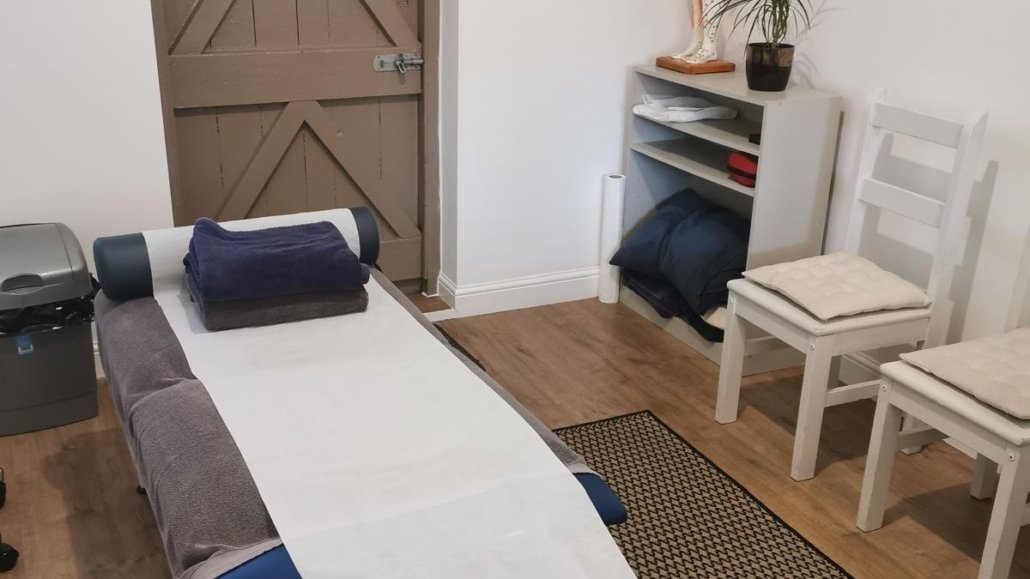
Lets have a chat
Before any treatment begins we’ll sit down and talk about whats going on for you. When did the pain start? What sets it off? What would you love to do again without having to think twice about it? These are just some of the questions I may ask.
Initially I’ll watch how you stand and walk and ask you to try a few movements to see how freely your back moves. I’m looking for clues about what might be going on, including signs of soft tissue injury or nerve irritation. If something in your history or the assessment suggests you need more urgent medical advice, I’ll explain what I’ve noticed and why I’d suggest getting it checked.
I’ll also ask questions from a Traditional Chinese Medicine (TCM) perspective, look at your tongue and feel your pulse. In TCM, Qi and Blood are traditionally understood to move through pathways in the body called meridians. When a back feels stiff, achy and painful it means there’s a blockage in this energy flow. One pattern I might consider is stagnation of Qi & Blood, the traditional idea that this movement has become restricted. The details matter, a back that eases with a walk can give me different clues from one that feels better with a hot water bottle. Those clues help me choose a specific acupuncture tailored towards you as an individual.
The Yang work – Getting things moving
Once you’re comfortable face down on the couch, I’ll feel how the muscles around your back respond to touch. I usually begin with gentle mobilisation, applying light pressure down the back and help mobilise the spine. If your muscles are tight and bracing, this gives your body and nervous system time to get used to the pressure and see how your back responds.
Sliding cupping is one of my favourite myofascial techniques. I slide a cup slowly up and down your back, using light suction to create a broad, gentle pull as it moves. I’ll explain how this can leave some marking, but its nothing to worry about. I might then use some deep tissue massage as part of the sports therapy work. How much pressure I use depends on how your back feels and how you are responding to treatment.
The Yin work – Giving your body a chance to relax.
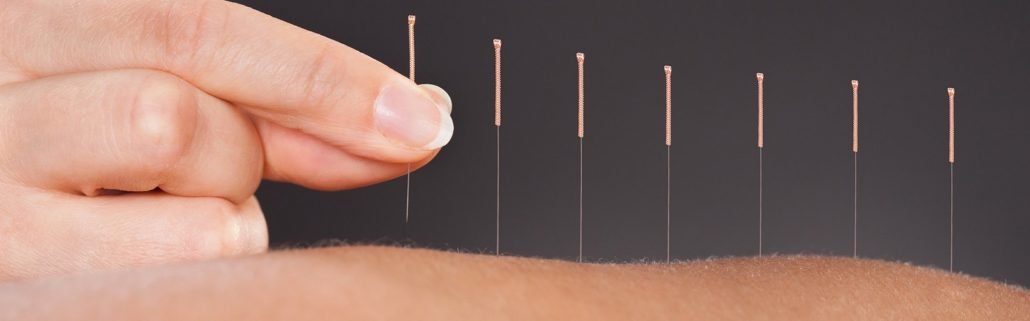
Then we change gear and introduce some acupuncture. I’ll place fine acupuncture needles at specific points along the acupuncture meridians. Some will be local to your back pain and others maybe on your legs, hands and head. Once you’re comfortable, the needles usually stay in for 20–25 minutes. I often use an infrared heat lamp at this point. It gives a lovely, gentle warmth across your back that promotes blood circulation, allowing your muscles to relax while you lie there.
I think this quieter part of the treatment matters, I like to think of it as the Yin part of the treatment and I place a lot of emphasis on it in the treatment room. It’s a chance for the mind and body to start to relax as you respond to the needling. The act of inserting a needle has specific physiological effects on the body, helping to modulate pain and promote the relaxation response. There’s some interesting science behind that change of pace. Needling stimulates sensory nerves, and researchers are exploring how this may influence both pain processing and the autonomic nervous system, which helps regulate our fight-or-flight and rest-and-digest responses. They’ve also looked at chemical messengers such as serotonin and dopamine, as well as the body’s own pain-relieving chemicals, including endorphins.
Over the years, I’ve noticed that when muscle tension or a soft tissue injury seems to be the primary reason for back pain, people can respond quickly to treatment and have longer lasting relief. Some people find that their relief lasts longer when they keep up with suitable exercises during and after their course of treatment.
How many sessions will I need?
People often ask me this, my first thought is usually, “How long is a piece of string?” As a starting point, I generally suggest three to four treatments at approximately weekly intervals, reviewing how you respond after each treatment. If you’ve found the sessions particularly helpful, we can talk about whether an occasional follow-up, perhaps once a month, would be worthwhile for you.
My personal philosophy is one treatment at a time and keep building. My aim is to help you move with less pain and get you back to doing the things that matter the most.
Need help with your back pain or maybe someone you know does!
Back pain may be my bread and butter, but every person who walks through my clinic door is different. If you’re fed up with planning your day around your back, maybe its worth having a conversation. We’ll talk through how a treatment may help and get you back to a pain free life so you can do the things that make life worthwhile.
Book a 60-minute initial consultation and treatment (£80). Any follow-up treatments are £70. PJY Therapies is based in the picturesque village of Knipton, in the Vale of Belvoir, near Grantham and Melton Mowbray. Get in touch or book online
For further reading please visit: Evidence Based Acupuncture · British Acupuncture Council’s back-pain review · Research on acupuncture and the autonomic nervous system